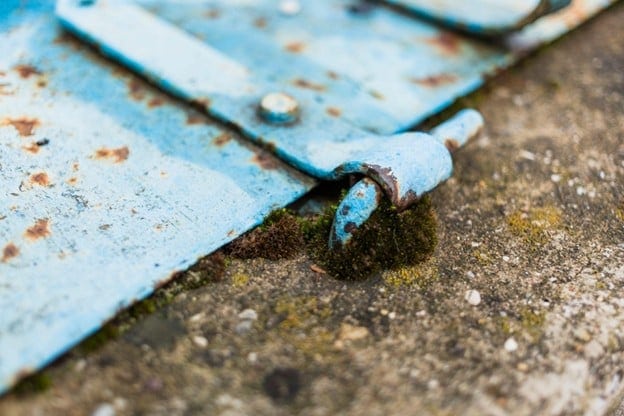

In humid regions, home maintenance services are not simply about upkeep; they function as structural risk management. In climates where moisture lingers, evaporates slowly, and reabsorbs into building materials, small exterior failures rarely stay small. Home maintenance services increasingly address what many homeowners overlook: the chain reaction that begins with minor drainage disruption and ends in costly whole-home damage.
Humidity changes the rules of deterioration. Water does not just fall and disappear. It saturates soil, clings to siding, seeps beneath shingles, and travels along framing. When drainage systems falter, the home absorbs that excess moisture incrementally. Home maintenance services that focus on system-level performance rather than isolated repairs are uniquely positioned to interrupt this cycle early.
The First Break in the Chain: Surface Drainage Failure
The drainage chain reaction often begins with something deceptively minor:
- A partially clogged gutter
- A downspout directing water too close to the foundation
- Compacted soil that prevents runoff absorption
- Improper grading near the perimeter
In humid climates, rainfall events are rarely isolated. The soil remains saturated between storms. When water cannot move efficiently away from the structure, it pools. Over time, hydrostatic pressure builds along foundation walls.
Home maintenance services that conduct full exterior flow assessments recognize that gutters are not standalone fixtures. They are the first line in a connected drainage network. If that first line underperforms, everything downstream is affected.
Soil Saturation and Foundation Stress
When runoff collects near the base of a home, several structural pressures intensify:
- Expansion and contraction of clay-heavy soils
- Increased lateral pressure against foundation walls
- Micro-cracking in concrete or masonry
- Water intrusion through hairline fractures
According to guidance from the Federal Emergency Management Agency, improper site drainage remains one of the most common contributors to foundation water intrusion in residential properties. While catastrophic flooding draws attention, chronic saturation is often more damaging over time.
Home maintenance services that evaluate drainage patterns help reduce this persistent stress. Addressing grading, downspout extensions, and soil displacement can stabilize moisture conditions before structural compromise begins.
Home Maintenance Services for the Crawlspace Humidity: The Hidden Multiplier
Once water begins infiltrating below grade, the crawlspace becomes the next vulnerability point. In humid climates, crawlspaces often mirror exterior moisture levels. When standing water or damp soil is introduced, evaporation raises relative humidity inside the enclosed area.
This creates conditions for:
- Wood rot along floor joists
- Insulation degradation
- Mold colonization on subfloor surfaces
- Pest attraction
The U.S. Environmental Protection Agency notes that sustained indoor humidity above 60 percent increases the likelihood of mold growth and structural material decay. Although the United States Environmental Protection Agency emphasizes indoor air quality, the origin of excess humidity frequently begins outside the home envelope.
Home maintenance services that treat crawlspaces as extensions of exterior drainage systems can mitigate this multiplier effect. Vapor barrier inspections, ventilation reviews, and drainage corrections are preventive, not cosmetic.
Fascia, Soffits, and the Roofline Cascade
Moisture does not only travel downward. When gutters clog or overflow, water spills over the roof edges, saturating fascia boards and soffits.
In humid conditions:
- Wood remains damp longer after rainfall
- Paint fails prematurely
- Sealants deteriorate
- Fasteners corrode
This repeated wetting and slow drying cycle accelerates rot. Once fascia boards weaken, gutters detach. The original minor clog evolves into structural instability at the roofline.
Home maintenance services that include regular roof-edge inspection interrupt this cascade before the fascia becomes compromised. By treating roof drainage as part of an integrated exterior system, long-term damage can be minimized.
Siding Saturation and Wall Cavity Intrusion
Overflowing water and splash-back from poor grading do not stay confined to the foundation. They saturate lower siding courses.
Over time, this can result in:
- Warped siding panels
- Compromised weather barriers
- Moisture intrusion into wall cavities
- Insulation compression and reduced R-value
Humid climates intensify this process because materials dry more slowly. Repeated exposure without full drying cycles weakens protective layers.
Home maintenance services that inspect siding joints, caulking lines, and water shedding patterns help maintain envelope integrity. Small gaps, if left untreated, allow moisture migration that is invisible from the exterior but destructive within.
The Interior Consequences
By the time interior symptoms appear, the drainage chain reaction is well advanced. Homeowners may notice:
- Musty odors
- Uneven flooring
- Drywall staining
- Increased indoor humidity
At this stage, remediation is more invasive and costly. The original issue, a minor exterior drainage inefficiency, has already triggered multiple secondary failures.
Home maintenance services that prioritize early detection can prevent interior consequences by maintaining the exterior as a defensive barrier rather than reacting to interior damage after the fact.
Why Humid Climates Accelerate the Chain Reaction
Humidity amplifies every stage of the drainage cascade because:
- Evaporation rates are slower
- Organic growth develops more rapidly
- Materials remain saturated longer
- Microbial activity accelerates wood decay
In drier climates, a gutter overflow may dry within hours. In humid environments, that same overflow can linger, seeping gradually into porous materials.
Home maintenance services that adapt inspection frequency and maintenance schedules to climate conditions recognize that regional factors change deterioration timelines. What may be a minor issue in one region becomes a systemic risk in another.
Home Maintenance Services And Preventing The Chain Reaction: A Systems-Based Approach
Breaking the drainage chain reaction requires a coordinated strategy rather than isolated fixes. Effective home maintenance services often include:
- Comprehensive gutter and downspout assessment
- Perimeter grading review
- Soil settlement monitoring
- Crawlspace humidity checks
- Roofline and fascia inspections
- Siding joint and sealant evaluation
Each element supports the others. When drainage is treated as an interconnected system, small failures are identified before they compound.
Rethinking Exterior Maintenance as Structural Stewardship
Many homeowners view exterior upkeep as seasonal or aesthetic. In humid climates, it is structural stewardship. Moisture behaves predictably when systems function correctly and unpredictably when small disruptions occur.
Home maintenance services increasingly operate as proactive infrastructure management rather than reactive repair providers. By focusing on how water moves around and through a property, they help homeowners avoid cascading failures that begin invisibly but expand steadily.
The drainage chain reaction illustrates a simple truth: exterior systems are interdependent. A clogged gutter, misdirected downspout, or subtle grading shift can initiate a progression that affects foundations, crawlspaces, walls, and interior air quality.
In humid climates, especially, vigilance is not optional. Home maintenance services that emphasize prevention, system evaluation, and climate-specific adaptation provide more than convenience; they reduce long-term structural risk and preserve the integrity of the entire home envelope.


